

Industry: Renewable Energy / Construction Role: Solar PV Installer / Photovoltaic Technician Experience Level: Entry Level (No Experience Required) Training: On-the-Job Paid Training / Apprenticeships Available Salary Range: $45,000 – $65,000+ (Entry) to $90,000+ (Lead) Growth Rate: 48% Employment Surge (2024-2034)
The green energy revolution is no longer a prediction; in 2026, it is the dominant economic force in the American skilled trades. Driven by the Inflation Reduction Act and corporate Net Zero commitments, the demand for Solar Photovoltaic (PV) Installers has triggered an employment surge of 48%—making this one of the fastest-growing careers in the country.
With approximately 4,100 new job openings annually and a starting salary range of $45,000 to $65,000, this is the ultimate “No Degree Required” career path. Whether you are a recent high school graduate, a military veteran, or a career changer leaving the hospitality or retail sectors, the solar industry is ready to train you.
This guide details the responsibilities, the salary progression, and the top companies (like Tesla and Sunrun) hiring massively in 2026.
Also check AI Prompt Engineer Jobs 2026: 400% Growth – $122K Average Salary (No Coding Required)
Background & Job Description
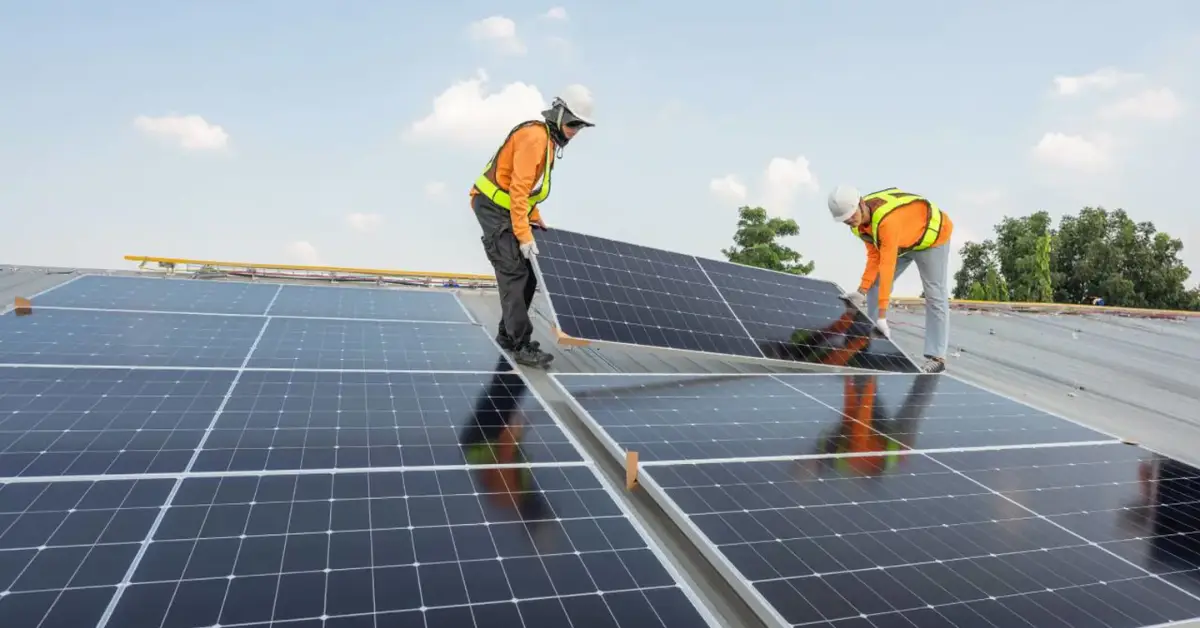
Solar PV Installers are the boots-on-the-ground heroes of the energy transition. They are responsible for assembling, installing, and maintaining the solar systems that convert sunlight into electricity for homes and businesses.
This role combines elements of roofing, electrical work, and structural engineering. You are not sitting at a desk; you are working outdoors, using your hands, and building infrastructure that lasts for 25 years.
This position fits into broader national goals of grid modernization. As utilities move away from coal and homeowners seek to hedge against rising electricity rates, your work ensures that the US energy grid becomes decentralized and resilient.
Solar PV Installer Jobs 2026: 48% Growth Surge – Entry Level Training Provided ($45K-$65K)
Key Responsibilities
Daily Duties:
- Site Assessment: Assist in evaluating roof structures, measuring sun exposure, and identifying electrical access points.
- Mechanical Installation: Install racking systems (the metal framework), mount solar panels, and ensure weather-tight sealing to prevent leaks.
- Electrical Wiring: (Under supervision) Connect panels to inverters and battery storage systems (like the Tesla Powerwall).
- Safety Compliance: Adhere strictly to safety protocols, including wearing fall protection gear (harnesses) when working on rooftops.
- Maintenance: Troubleshoot system errors, clean panels, and repair wiring on existing installations.
Work Environment:
- 80% Outdoor: Work performed on rooftops or ground-mount sites.
- Physical: Requires lifting panels (approx. 40-50 lbs) and climbing ladders.
- Team: You typically work in a “Crew” of 3-5 people, traveling together to local job sites.
Qualifications & Training
No College Degree is Required. Solar installation is a skilled trade where attitude and physical aptitude count more than diplomas.
Minimum Requirements:
- High School Diploma or GED.
- Driver’s License: Valid license required to drive company trucks to job sites.
- Physical Fitness: Ability to lift 50 lbs, work on rooftops, and withstand outdoor weather conditions (heat/cold).
- Fearless: Comfortable working at heights.
Preferred (But Not Required):
- Construction Experience: Background in roofing, carpentry, or general labor is a huge plus.
- OSHA 10 Certification: Basic safety training (can often be done online for ~$60).
- NABCEP Associate Credential: An entry-level solar certification that makes your resume stand out.
Training Pathways: Most large employers offer Paid Apprenticeships. You are hired at an entry-level rate, trained for 3-12 weeks on safety and electrical basics, and then certified as a fully qualified installer.
Salary & Benefits
Entry-Level Salary Range:
- Trainee/Apprentice: $40,000 – $50,000 ($19-$24/hour).
- Installer II (1-2 Years Exp): $45,000 – $55,000 ($26-$30/hour).
- Crew Lead (3-5 Years Exp): $55,000 – $70,000 ($35+/hour).
- Master Electrician/Ops Manager: $90,000+.
Standard Benefits:
- Overtime: High potential for overtime pay during peak seasons (Spring/Summer).
- Health: Comprehensive Medical, Dental, and Vision.
- 401(k): Company match (typically 3-5%).
- Tools: Company-provided tools, PPE (Personal Protective Equipment), and uniform.
- Allowances: Per diem for travel if working on remote solar farms.
Top Hiring Companies 2026
The following companies are the giants of the US solar industry and are perpetually hiring for entry-level roles across all 50 states.
1. Sunrun
- Role: Solar Installer – Entry Level
- Locations: Nationwide (40+ states)
- Why Apply: The largest residential solar installer in the US. Excellent career ladder from Installer to Site Surveyor.
- Apply Here: https://www.sunrun.com/careers
2. Tesla Energy
- Role: Solar Roof Installer
- Locations: CA, TX, FL, NY, AZ
- Why Apply: Work on cutting-edge tech like the “Solar Roof” and “Powerwall.” Tesla typically pays slightly above market average.
- Apply Here: https://www.tesla.com/careers
3. Vivint Solar (A Sunrun Company)
- Role: PV Installation Technician
- Locations: 22 States
- Why Apply: Known for performance bonuses and company vehicles.
- Apply Here: https://www.sunrun.com/vivint-solar-careers
4. SunPower
- Role: Solar Installation Apprentice
- Locations: CA, AZ, TX, FL
- Why Apply: Offers a 12-week paid apprenticeship program that is highly respected in the industry.
- Apply Here: https://us.sunpower.com/careers
5. Trinity Solar
- Role: Solar Panel Installer
- Locations: Northeast US (NY, NJ, PA, CT, MA)
- Why Apply: Strong presence in the Northeast; offers Union wages in specific markets.
- Apply Here: https://www.trinitysolar.com/careers
Application Tips & Insights
1. Highlight “Transferable Skills” If you have no solar experience, emphasize manual labor.
- Keywords to use: “Roofing,” “Landscaping,” “Electrical Wiring,” “Power Tools,” “Safety Compliance,” “Ladder Safety.”
2. Mention “Reliability” In construction, showing up on time is 90% of the battle. In your cover letter or interview, emphasize your punctuality and work ethic. Solar crews rely on every member; if you are late, the truck can’t leave.
3. Get the OSHA 10 Card If you want to beat the competition, spend a weekend getting your OSHA 10 Construction card online. It costs under $100 and shows employers you are serious about safety, saving them training time.
4. Ask About “Per Diems” During the interview, ask if the company offers travel pay or per diems. Some installers make an extra $10,000 a year just in tax-free travel allowances for working on projects 2 hours away from home.
Frequently Asked Questions
Q: Do I need to be an electrician? A: No. While electrical experience helps, most companies train entry-level workers on the DC wiring basics. However, becoming a licensed electrician later is a great way to double your salary.
Q: Is it dangerous? A: Like all construction, there are risks (falls, heat). However, safety is the #1 priority for major companies like Tesla and Sunrun. You will be trained on harnesses and fall-arrest systems before you ever step on a roof.
Q: Is this job seasonal? A: In some northern states, work slows down in deep winter (snow). However, in the Sun Belt (AZ, TX, FL, CA), work is year-round.
Q: Can women apply? A: Absolutely. The industry is actively recruiting women. Modern racking systems are lighter and click-together, making the job less about brute strength and more about technique and speed.
Suggested Focus Keywords
Solar Installer Jobs 2026, Entry Level Renewable Energy Careers, Solar PV Technician Training, Tesla Solar Jobs, Sunrun Careers, Green Energy Jobs No Degree, Solar Apprenticeship 2026, High Paying Trade Jobs