
In a profession where metabolic precision and patient outcomes are paramount, the next generation of dietitians faces a steep financial climb. The cost of advanced degrees and supervised practice programs often creates a barrier to entry, leaving brilliant minds sidelined by logistical hurdles rather than a lack of aptitude. This is where the Academy of Nutrition and Dietetics Foundation Scholarships 2026 step in, offering more than just monetary relief—they serve as a critical investment in the future of evidence-based nutritional science.
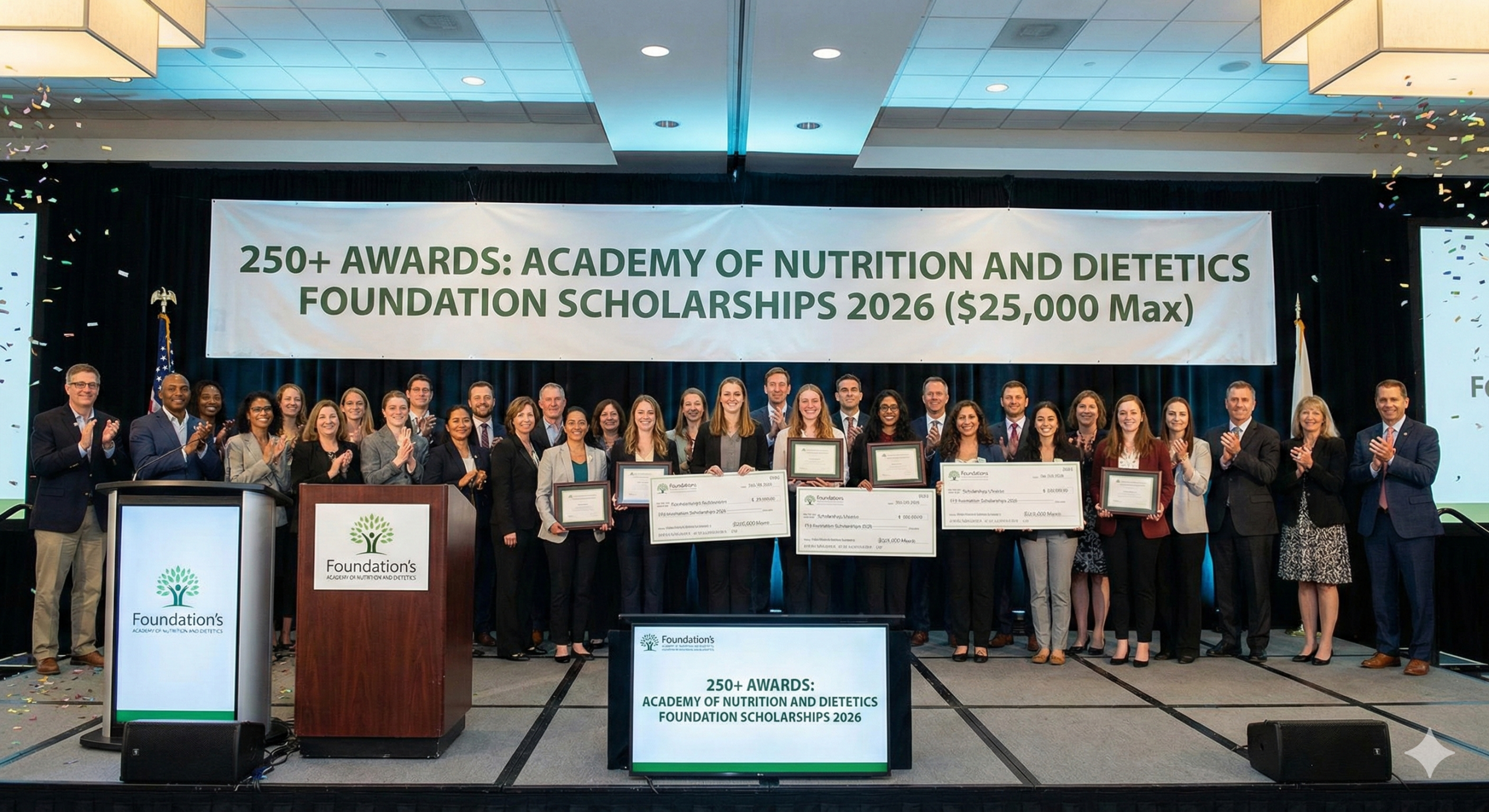
With over 250 distinct awards available, totaling up to $25,000 for the most competitive recipients, this funding cycle represents a massive institutional push to support diverse voices in dietetics. From undergraduate students navigating their first clinical rotations to doctoral candidates conducting groundbreaking research in food sustainability, the scope of this opportunity is intentionally broad. As we approach the 2026 cycle, understanding the strategic alignment between your career goals and the Academy’s mission is no longer optional; it is the foundation of a winning application.
Also check How to Secure the Fully Funded UCL Global Undergraduate Scholarship 2026
Table of Contents
Background & Job Description
The Academy of Nutrition and Dietetics Foundation stands as the largest charitable organization devoted exclusively to supporting nutrition and dietetics professionals. Unlike general academic scholarships, these awards are specifically engineered to address the unique financial burdens within the food and nutrition sector. The 2026 funding cycle is not merely a distribution of funds; it is a strategic allocation of resources to individuals who demonstrate the potential to solve complex public health challenges, ranging from pediatric malnutrition to geriatric metabolic health.
Prospective applicants should view these awards not as “free money,” but as a competitive grant for professional development. The “Job Description” in this context refers to the unwritten role of an ambassador for the Academy’s mission: to empower members to advance the nation’s health and well-being through evidence-based food and nutrition practices. Recipients of the Academy of Nutrition and Dietetics Foundation Scholarships 2026 are expected to embody the rigor and ethical standards required to elevate the profession.
The sheer volume of awards—exceeding 250—indicates a high demand for capable students across various sub-specialties. Whether you are pursuing a Didactic Program in Dietetics (DPD), a Dietetic Internship (DI), or graduate studies in nutrition science, the foundation identifies specific niches where financial support can yield the highest return on investment for the healthcare ecosystem.
The Insider’s Perspective
Writing a scholarship application for a field as technical as nutrition requires a delicate balance of academic prowess and human empathy. It is easy to get lost in the weeds of biochemistry and calorie counting, but the selection committees are looking for the narrative arc of a caregiver. They want to see how your academic record translates into real-world clinical impact. The reality of securing these funds is that they are highly competitive; generic essays about “loving food” are filtered out immediately in favor of candidates who articulate a specific vision for the future of dietetics.
“The most successful applicants for the Academy of Nutrition and Dietetics Foundation Scholarships are those who connect their personal story to a systemic health challenge,” says Dr. Elena Ross, a senior academic advisor specializing in health sciences. “They don’t just say they want to be a dietitian; they explain how their unique background will help them solve a specific gap in nutritional care, whether that’s in community outreach or clinical research.”
There is a psychological component to this application that many overlook. You are asking for trust and capital to complete your training. Therefore, your application must project readiness. This means your transcripts must be immaculate, and your letters of recommendation must come from mentors who have observed your clinical intuition, not just your classroom attendance. The foundation invests in people who look like the future of the profession.
Key Responsibilities
While scholarships do not have “duties” in the traditional employment sense, receiving funds from the Academy of Nutrition and Dietetics Foundation carries implicit expectations. You are effectively entering a stewardship agreement. If you are selected as a recipient, the following responsibilities outline the commitment required to maintain the integrity of the award:
- Maintain Academic Excellence: Recipients must remain enrolled in an accredited program and maintain a specific GPA (typically 3.0 or higher) to retain eligibility for the disbursed funds.
- Adherence to Professional Ethics: You are expected to uphold the code of ethics for nutrition and dietetics professionals. Any academic or professional misconduct can result in the immediate revocation of funding.
- Reporting and Communication: Periodic reporting on academic progress and how the funds are being utilized may be required. This is essential for the Foundation’s donor stewardship.
- Program Participation: Some specialized awards require attendance at specific symposiums or the annual Food & Nutrition Conference & Expo (FNCE).
- Community Impact: Recipients are encouraged to engage in community service or outreach that aligns with the Foundation’s goal of improving public health through nutrition.
Qualifications
The eligibility criteria for the Academy of Nutrition and Dietetics Foundation Scholarships 2026 are rigorous. The Foundation prioritizes students who have demonstrated a clear commitment to the dietetics profession through their academic choices and extracurricular activities. Below is a breakdown of the standard requirements.
Required Qualifications
- Active Membership: Must be a student member of the Academy of Nutrition and Dietetics.
- Academic Standing: Must be enrolled in a program accredited by the Accreditation Council for Education in Nutrition and Dietetics (ACEND).
- Grade Point Average: A minimum cumulative GPA of 3.0 on a 4.0 scale is required across all institutions attended.
- Coursework: Completion of specific core nutrition courses prior to the application deadline.
- Character: No history of academic dishonesty or professional misconduct.
Preferred Qualifications for 250+ Awards: Academy of Nutrition and Dietetics Foundation Scholarships 2026 ($25,000 Max)
While meeting the requirements above gets your foot in the door, the preferred qualifications determine who actually receives the check. The Foundation values diversity, leadership, and unique perspectives that enrich the field.
- Leadership Experience: Evidence of leadership roles within student dietetic associations, university organizations, or volunteer groups.
- Specialization Focus: Applicants focusing on high-need areas such as pediatric nutrition, gerontology, or food security are often given preference for specific named awards.
- Cultural Competence: Demonstrated ability to work with diverse populations. Experience in underserved communities is a significant asset.
- Research Background: Participation in undergraduate research projects or publications in peer-reviewed journals.
- Career Narrative: A clear, compelling vision for how the scholarship will directly impact the applicant’s career trajectory and subsequent service to the community.
Why Apply for This Position
Applying for the Academy of Nutrition and Dietetics Foundation Scholarships 2026 is a strategic career move that extends far beyond the immediate financial benefit. In the current economic climate, graduating with minimal debt allows for greater flexibility in career choices. You will be able to pursue low-paying but high-impact roles, such as work in public health clinics or non-profits, rather than being forced into private practice solely to service student loans.
Furthermore, having “Academy of Nutrition and Dietetics Foundation Scholar” on your resume is a badge of distinction. It signals to future employers—whether hospitals, food corporations, or government agencies—that you were vetted by the gold standard of the profession. It distinguishes you in a crowded marketplace of graduates. This award acts as a catalyst, accelerating your transition from student to trusted expert.
The application process itself is a valuable exercise in professional development. It forces you to articulate your goals, audit your accomplishments, and seek critical feedback from mentors. Even if you do not secure the award immediately, the refined materials and stronger relationships you build during this process will serve you throughout your entire career.
Financial Information & Benefits
The financial scope of these scholarships is vast, designed to accommodate different levels of study and financial need. With over 250 awards available, the aggregate amount distributed annually is substantial. While individual award amounts vary based on the specific named scholarship and the donor’s intent, the maximum award can reach up to $25,000.
- Variety of Awards: Funding ranges from smaller $1,000 grants for conference attendance to multi-year commitments for graduate study.
- Tuition and Fees: Funds are generally intended to cover tuition, fees, books, and necessary educational supplies.
- Living Expenses: Depending on the specific award, funds may also be applied to reasonable living expenses during supervised practice internships.
- Non-Taxable Status (Consult a Professional): Many educational scholarships are tax-free if used for qualified expenses, though recipients should consult a tax advisor.
- Renewability: While many are one-time awards, some graduate-level scholarships are renewable for up to two years based on continued academic performance.
How to Apply
The application process for the Academy of Nutrition and Dietetics Foundation Scholarships 2026 is managed entirely through their online portal. You must gather all necessary documentation before beginning the application, as the system does not allow you to save and return later. Preparation is the key to avoiding technical errors.
First, ensure your Academy membership is active and your student status is verified. You will need to upload official transcripts from every institution you have attended. Do not wait until the last minute; transcripts can take weeks to process. Second, identify recommenders early. These individuals should be professors or internship directors who can speak specifically to your academic ability and character. Provide them with your resume and a brief summary of the scholarship so they can tailor their letters.
Finally, draft your personal statement carefully. This is the narrative core of your application. It should be free of grammatical errors and highly specific to the scholarship criteria. Once your materials are assembled, you can submit your application via the link below. Note that the application window is strict; late submissions are never accepted.
Frequently Asked Questions
What is the deadline for the 2026 scholarships?
While specific dates for the 2026 cycle are usually announced in late 2025, the Foundation typically opens applications in the spring with a deadline in early summer. Always check the official website for the exact timeline.
Can international students apply?
Generally, these scholarships are open to students enrolled in ACEND-accredited programs in the United States. However, specific named awards may have different criteria. International students should review the individual award descriptions carefully.
Are part-time students eligible?
Yes, many awards are available to students enrolled at least half-time. Requirements vary by specific scholarship, but part-time status does not automatically disqualify you.
How are recipients selected?
Selection is based on a holistic review of academic achievement, financial need, leadership potential, and alignment with the Foundation’s mission.
Do I need to be a U.S. citizen?
Not necessarily. Eligibility often depends on the specific award and residency status, but many are open to permanent residents and eligible non-citizens enrolled in U.S. programs.