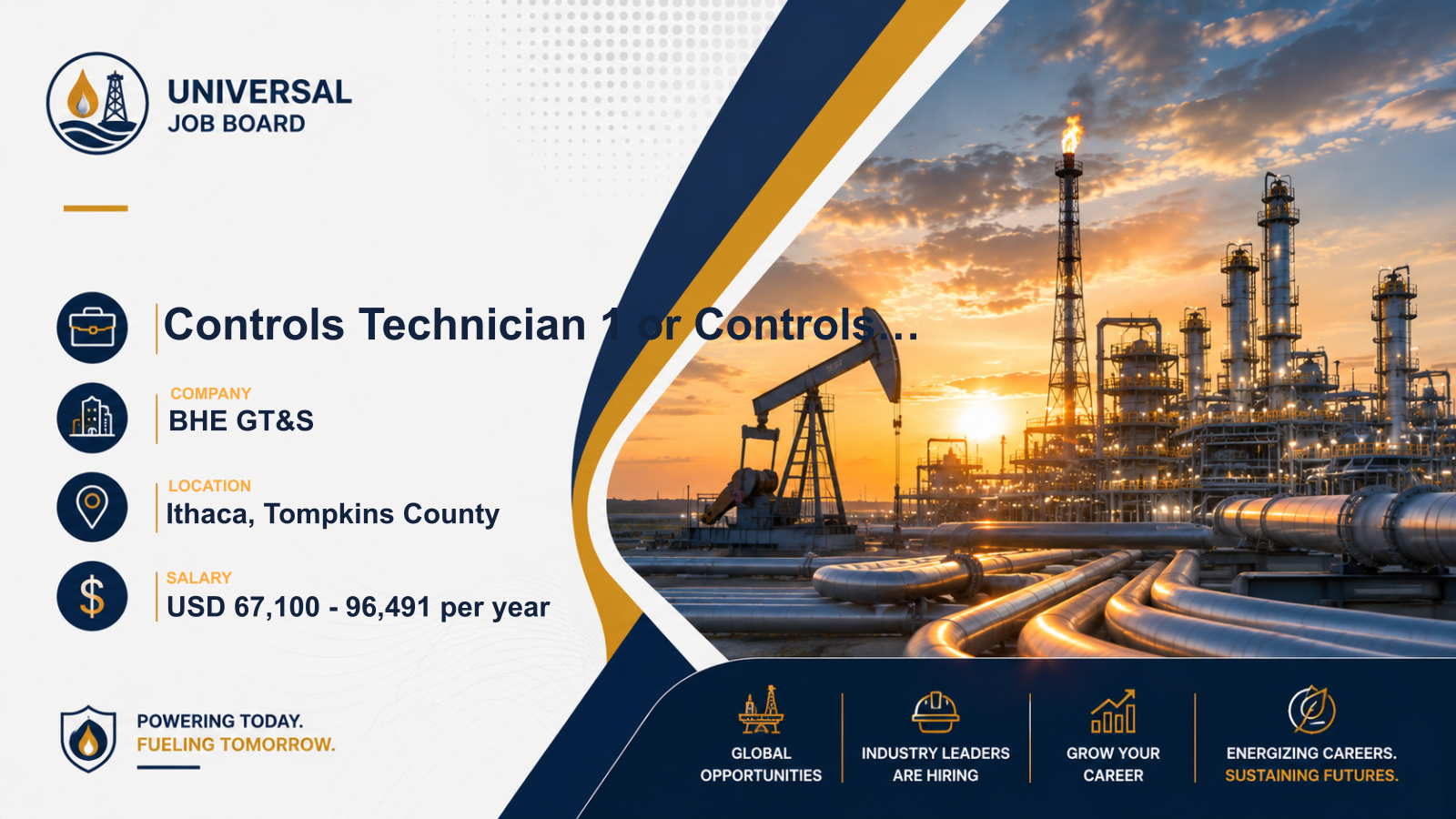

Controls Technician positions are currently available, offering an exciting opportunity for skilled professionals in the Energy, Oil & Gas sector. These roles are critical for ensuring the efficient and safe operation of industrial processes through the management of control systems. As industries become increasingly reliant on automation and sophisticated monitoring, the demand for qualified Controls Technicians remains strong. This role requires a blend of technical expertise, problem-solving skills, and a commitment to precision, making it a rewarding career path for those who thrive in a dynamic and technically challenging environment. With a competitive salary range, this opportunity in 2026 is designed to attract top talent and foster long-term growth within the organization.
Also check I&C Engineer 1 Position at ZAP Engineering: Requirements and Pay
Table of Contents
Controls Technician Overview
The Controls Technician role is fundamental to the operational integrity and efficiency of modern industrial facilities, particularly within the demanding Energy, Oil & Gas sector. In 2026, these technicians are indispensable for maintaining, troubleshooting, and calibrating the complex array of electronic and pneumatic instrumentation and control systems that govern critical processes. This involves working with Programmable Logic Controllers (PLCs), Distributed Control Systems (DCS), and Supervisory Control and Data Acquisition (SCADA) systems, ensuring they function precisely as intended. The technicians are often the first responders to system malfunctions, requiring a keen diagnostic ability to identify root causes and implement effective solutions, thereby minimizing downtime and preventing potential hazards. Their work directly impacts production output, safety protocols, and environmental compliance, underscoring the significance of their expertise. This specific opening seeks individuals who can contribute to the seamless operation of these vital systems, offering a robust salary range and the chance to be part of a leading organization in the energy industry. The role is designed for a professional who is not only technically adept but also safety-conscious and detail-oriented, ready to tackle the challenges of operating complex industrial controls.
Key Responsibilities
- Installation, calibration, maintenance, and repair of a wide range of instrumentation and control devices, including transmitters, sensors, control valves, and actuators.
- Troubleshooting and diagnosing issues within control systems, PLCs, DCS, and SCADA systems to identify root causes of malfunctions.
- Performing preventative maintenance on control equipment to ensure optimal performance and longevity.
- Reading and interpreting technical manuals, schematics, blueprints, and P&IDs (Piping and Instrumentation Diagrams).
- Configuring and programming control system hardware and software, including PLCs and HMIs (Human-Machine Interfaces).
- Ensuring all work complies with safety regulations, environmental standards, and company policies.
- Collaborating with engineers and other technical staff to implement system upgrades and modifications.
- Documenting all maintenance, repair, and installation activities accurately.
- Responding to emergency calls for system failures or critical issues.
- Participating in ongoing training and development to stay current with new technologies and best practices.
Qualifications
- High school diploma or GED required; Associate’s degree or certification in a relevant technical field (e.g., Industrial Automation, Electrical Technology, Instrumentation) is highly preferred.
- Proven experience as a Controls Technician or in a similar role, ideally within the Energy, Oil & Gas industry.
- Hands-on experience with various types of instrumentation (pressure, temperature, flow, level) and control valves.
- Familiarity with PLC programming and troubleshooting (e.g., Allen-Bradley, Siemens).
- Experience with DCS and SCADA systems is advantageous.
- Ability to read and interpret electrical schematics, P&IDs, and technical documentation.
- Proficiency in using diagnostic tools and test equipment.
- Knowledge of industrial safety procedures and regulations.
- Strong problem-solving and analytical skills.
- Ability to work independently and as part of a team.
- Physical ability to work in industrial environments, including climbing, kneeling, and lifting as required.
Key Skills Needed
- Instrumentation Proficiency: Deep understanding of how to install, calibrate, and maintain various sensors, transmitters, and control devices. Highlight specific types you have experience with.
- PLC/DCS/SCADA Expertise: Demonstrate your ability to work with common industrial control platforms, including troubleshooting and basic programming/configuration. Mention specific brands if you have strong experience (e.g., Allen-Bradley, Siemens, Emerson).
- Troubleshooting and Diagnostics: Showcase your systematic approach to identifying and resolving issues in complex control systems. Provide examples of challenging problems you’ve solved.
- Technical Documentation: Emphasize your skill in reading and interpreting P&IDs, electrical schematics, and vendor manuals.
- Safety Acumen: Clearly state your commitment to safety protocols and knowledge of relevant regulations in industrial settings.
- Adaptability and Continuous Learning: Mention your willingness to learn new technologies and adapt to evolving industry standards.
Interview Prep: Likely Questions
- “Describe a time you had to troubleshoot a complex control system failure under pressure. What was your process, and what was the outcome?”
Tip: Use the STAR method (Situation, Task, Action, Result) to structure your answer. Focus on your methodical approach to diagnosis, the specific technical steps you took, and the positive resolution, highlighting any lessons learned.
- “What experience do you have with PLC programming and HMI configuration? Can you walk us through a project where you implemented or modified a control logic?”
Tip: Be prepared to discuss specific PLC brands and software you’ve used. Detail your role in the project, the objectives, your specific contributions to the programming or configuration, and how you ensured the system met requirements.
- “How do you ensure compliance with safety regulations while performing maintenance on control systems in an industrial plant?”
Tip: Discuss your understanding of lockout/tagout procedures, personal protective equipment (PPE), hazard assessments, and any specific safety certifications you hold. Emphasize a proactive approach to safety and your awareness of the potential risks involved.
Salary & Benefits
This role offers a competitive salary ranging from USD 67,100 to 96,491 per year. While specific benefits are not detailed in the posting, typical industry offerings often include comprehensive health insurance, retirement plans, paid time off, and opportunities for professional development and training.
How to Apply
To express your interest in this Controls Technician position, please follow the application link provided. Be sure to highlight your relevant experience and skills in your application materials.
Disclaimer: Universal Job Board is a job listings platform, not the recruiter or employer for this role. This posting is sourced from a public job board for informational purposes — please verify all details directly with the employer before applying. We do not charge any fees for recruitment.
Frequently Asked Questions
- Q: What is the typical experience level required for a Controls Technician 1 versus a Controls Technician 2?
A: While the job posting lists both as Controls Technician 1 or 2, generally, a Technician 2 role implies more experience, potentially requiring a higher level of autonomy, more complex troubleshooting, and possibly some lead responsibilities, compared to a Technician 1 role which might be more focused on guided tasks and foundational experience.
- Q: Is this a remote position?
A: Given the nature of a Controls Technician role within the Energy, Oil & Gas industry, which often involves hands-on work with physical equipment on-site, this position is likely to be field-based or require a significant on-site presence. Remote work is generally not feasible for the core duties of this role.
- Q: What types of control systems are most commonly encountered in the Energy, Oil & Gas sector for this role?
A: Technicians in this sector frequently work with Programmable Logic Controllers (PLCs) for automated processes, Distributed Control Systems (DCS) for large-scale plant operations, and Supervisory Control and Data Acquisition (SCADA) systems for monitoring and control across geographically dispersed assets. Familiarity with instrumentation like pressure, temperature, and flow transmitters is also crucial.
Secure your place in this vital industry by applying today.