
I&C Engineer opportunities are emerging in the energy sector for 2026. Professionals with a background in instrumentation and control systems are encouraged to explore roles that are critical to the safe and efficient operation of complex industrial facilities. This field requires a blend of technical expertise, problem-solving skills, and a commitment to precision. As the energy landscape evolves, the demand for skilled I&C Engineers remains robust, offering stable and rewarding career paths. Staying informed about these openings is key for anyone looking to advance their career in this vital industry.
Also check CP Energy Transportation Seeks Hazmat CDL-A Drivers – $78k-$104k/Year Details Inside
Table of Contents
I&C Engineer Overview
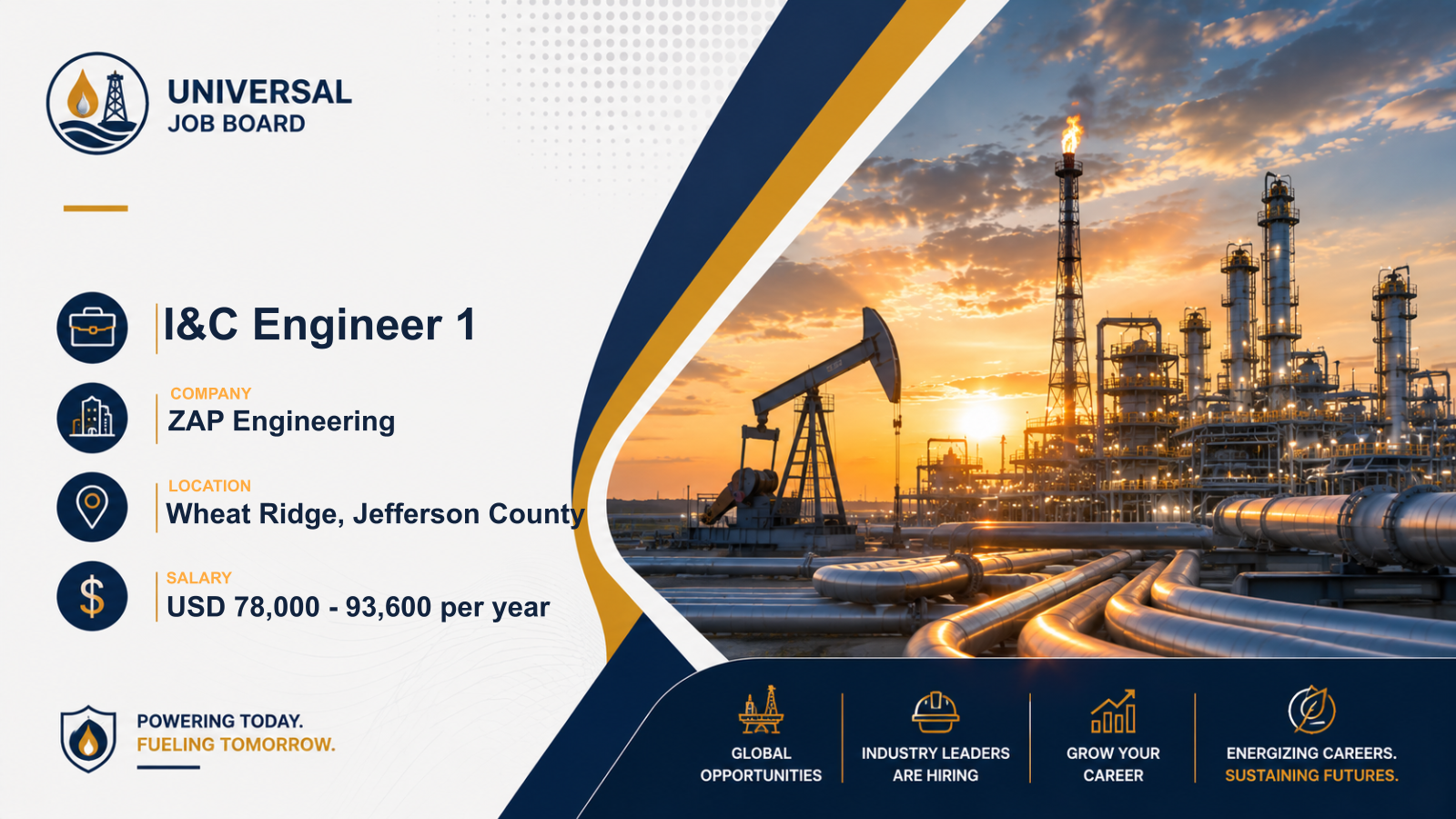
This position for an I&C Engineer 1 falls within the dynamic Energy, Oil & Gas Jobs category for 2026. As an Instrumentation and Control Engineer, you will play a crucial role in designing, implementing, and maintaining the sophisticated systems that govern industrial processes. Your work will directly impact operational efficiency, safety protocols, and the overall reliability of energy infrastructure. The role requires a foundational understanding of control theory, electronic systems, and process automation. In the Oil & Gas sector, precision is paramount, and the I&C Engineer is at the forefront of ensuring that complex machinery and sensitive processes operate within optimal parameters, minimizing risk and maximizing output. This is an entry-level position, indicating a fantastic opportunity for recent graduates or early-career professionals to gain hands-on experience in a high-demand field.
Key Responsibilities
- Assist in the design, development, and implementation of instrumentation and control systems for industrial processes.
- Support the calibration, testing, and troubleshooting of various control system components, including sensors, transmitters, controllers, and actuators.
- Collaborate with senior engineers and cross-functional teams to ensure seamless integration of I&C systems with other plant operations.
- Participate in the review of engineering drawings, P&IDs (Piping and Instrumentation Diagrams), and technical specifications.
- Contribute to the development and execution of functional test procedures and commissioning plans.
- Maintain accurate documentation of system configurations, changes, and maintenance activities.
- Learn and apply industry best practices and standards related to instrumentation and control engineering.
- Assist in the monitoring and analysis of system performance data to identify areas for improvement.
- Provide technical support for ongoing operations and maintenance activities.
- Engage in professional development to stay current with emerging technologies and methodologies in the I&C field.
Qualifications
- Bachelor’s degree in Electrical Engineering, Control Systems Engineering, Mechanical Engineering, or a related technical field is typically required.
- Foundational knowledge of industrial instrumentation, including various types of sensors (pressure, temperature, flow, level) and their operating principles.
- Understanding of control system architectures, such as Distributed Control Systems (DCS) and Programmable Logic Controllers (PLC).
- Familiarity with basic electronic circuits, signal conditioning, and data acquisition principles.
- Exposure to safety instrumented systems (SIS) is a plus.
- Ability to read and interpret engineering schematics, P&IDs, and technical manuals.
- Basic understanding of relevant industry codes and standards (e.g., ISA standards).
- Good analytical and problem-solving skills, with attention to detail.
- Effective communication and interpersonal skills to collaborate within a team environment.
- Proficiency in standard office software (e.g., Microsoft Office Suite).
Key Skills Needed
- Instrumentation Fundamentals: A solid grasp of how various sensors and transmitters work, including their principles of operation, calibration requirements, and typical applications.
- Control Systems Theory: Basic understanding of feedback control loops, PID control, and system dynamics is essential for understanding how systems are regulated.
- Troubleshooting & Diagnostics: The ability to systematically identify and resolve issues within complex instrumentation and control loops.
- Technical Documentation: Skill in reading, understanding, and creating technical documents, including P&IDs, wiring diagrams, and specifications.
- Problem-Solving: A methodical approach to analyzing challenges and developing effective solutions.
- Teamwork & Communication: The capacity to work collaboratively with engineers, technicians, and operators, and to clearly articulate technical concepts.
- Adaptability: Willingness to learn new technologies and adapt to evolving project requirements and industry standards.
Interview Prep: Likely Questions
- “Describe your understanding of a basic feedback control loop. What are the key components, and how do they interact?”
Tip: Focus on explaining the concepts of measurement, comparison, controller action, and output, using terms like setpoint, process variable, error signal, and final control element. - “Imagine a pressure transmitter is giving erratic readings. Walk me through your process for diagnosing the issue.”
Tip: Detail a systematic approach, starting with visual inspection, checking connections, verifying calibration, examining the process itself, and considering environmental factors. - “How do you approach learning a new piece of industrial equipment or a new control system technology?”
Tip: Highlight your proactive learning methods, such as reading manuals, seeking guidance from senior colleagues, hands-on practice, and utilizing online resources.
Salary & Benefits
This role offers a salary range of USD 78,000 – 93,600 per year. While specific benefits are not detailed in the provided information, typical offerings in the Energy, Oil & Gas sector often include health insurance, retirement plans, paid time off, and opportunities for professional development and training.
How to Apply
To apply for this I&C Engineer 1 position, interested candidates should follow the provided application link. Ensure your resume highlights relevant education, any internship experience, and foundational knowledge in instrumentation and control systems.
Disclaimer: Universal Job Board is a job listings platform, not the recruiter or employer for this role. This posting is sourced from a public job board for informational purposes — please verify all details directly with the employer before applying. We do not charge any fees for recruitment.
Frequently Asked Questions
-
Q: What kind of experience is typically expected for an I&C Engineer 1 role?
A: This is an entry-level designation, suggesting that while a degree in a relevant engineering field is fundamental, extensive prior work experience might not be mandatory. Internships, co-op programs, or significant academic projects related to control systems or instrumentation are often highly valued. -
Q: Will this role involve fieldwork or primarily office-based tasks?
A: Roles in the Energy, Oil & Gas sector often require a balance. While design and analysis may occur in an office setting, I&C Engineers are frequently involved in site visits for installation supervision, commissioning, troubleshooting, and ongoing maintenance, which can involve working at industrial plant locations. -
Q: What are the typical career progression paths for an I&C Engineer?
A: Starting as an I&C Engineer 1, professionals can advance to roles like I&C Engineer, Senior I&C Engineer, Project Engineer, or specialize in areas such as automation, process control, or safety systems. Management tracks are also available for those interested in leading teams or projects.
Explore this opportunity to build a foundational career in Instrumentation and Control Engineering.